


 News Desk
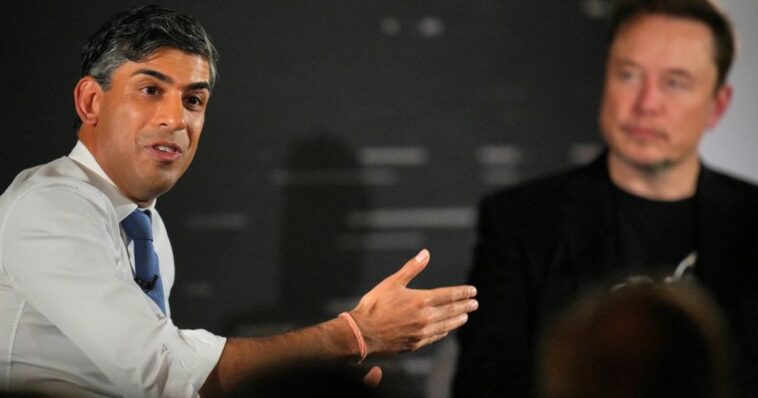
The Artificial Intelligence Summit held at Bletchley Park last week was historic for the field of AI safety. The summit, which brought together nearly thirty governments from the US, China, and the EU, produced a declaration aimed at tightening oversight of AI.
Signed by Rishi Sunak, the statement emphasised the need for human-centred, trustworthy, and ethical AI design. In addition, it emphasised the need for international cooperation and a “globally inclusive network of scientific research” in regard to AI safety.
The primary objective of the summit was to keep frontier AI—a term used to characterise the most advanced systems—from growing out of control. The statement acknowledged the potential for serious, even catastrophic, harm caused by these AI models’ most notable capabilities. This was preceded by a discussion of threats that are more direct, like disinformation campaigns and cyberattacks. While there is ongoing discussion about whether artificial intelligence (AI) has the potential to wipe out humanity, most people seem to agree that disinformation created by AI is an urgent problem that needs to be addressed.

Sunak’s objective of making the summit an annual occasion has been accomplished; a virtual event will take place in South Korea in six months, and a full-fledged summit will take place in France in twelve months. According to Morrison Foerster Charlotte Walker-Osborn, a technology partner, the declaration will likely lead to some level of international legislative and governmental agreement on basic principles for regulating artificial intelligence. These principles include transparency regarding the use of AI and when it should be used, disclosure of the data used in training systems, and the requirement for dependability. However, given that various countries have distinct general approaches to governance and regulation, a fully coordinated strategy is unlikely.
A “state of AI science” report was presented during the summit, chaired by Yoshua Bengio, one of the three “godfathers of AI,” who was honoured with the ACM Turing award in 2018 for his contributions to the field. Renowned AI specialists will be contributing to the report, assisted by an advisory group made up of participants from the summit’s member countries. Bengio endorsed Tegmark’s letter and a May statement saying that lowering the risk of AI extinction ought to be the world’s top priority, right up there with averting pandemics and nuclear war. The British prime minister said that the Intergovernmental Panel on Climate Change had inspired the idea, which had the support of UN secretary-general António Guterres.



GIPHY App Key not set. Please check settings