


 News Desk
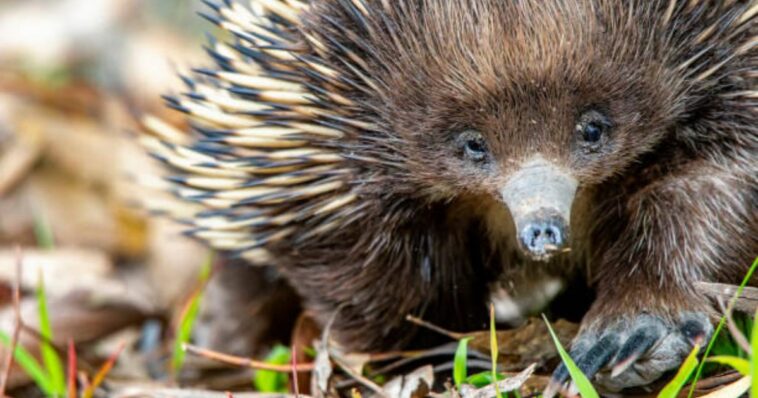
For the first time, scientists have captured on camera the existence of an extinct mammal named after Sir David Attenborough, dispelling fears that it is gone.
Four three-second videos of Attenborough’s long-beaked echidna were captured during a research expedition to Indonesia by Oxford University. Known for their furry appearance and beak, echidnas are believed to have originated during the time of dinosaur roving Earth 200 million years ago. Known as “living fossils,” they are believed to have originated approximately 200 million years ago, during the time of the dinosaurs’ extinction.
A dead animal specimen from a museum that was decades old was the only proof that this specific species ever existed. A month-long expedition led by Dr. James Kempton, a member of a multinational team, traversed hitherto uncharted territory in the Cyclops Mountains, an untamed rainforest habitat situated 2,000 metres (6,561 feet) above sea level. Along with observing healthy populations of birds of paradise and tree kangaroos, the expedition also found new species of insects and frogs.

The echidna is the only mammal that lays eggs, and it is one of four species with long beaks; two species are critically endangered: the western and Attenborough echidnas. Previous trips into the Cyclops Mountains had found evidence of the Attenborough echidna’s continued presence in the form of ‘nose pokes’ in the ground. Nevertheless, they were unable to reach the farthest corners of the mountains and offer conclusive evidence of their presence.
A single, highly guarded specimen in the Netherlands’ natural history museum, Naturalis’ Treasure Room, has served as the only proof for the last 62 years that the Attenborough echidna ever existed. The specimen’s significance was not fully realised until 1998, when x-rays showed that it was a mature, unique specimen rather than a juvenile of a different echidna species.
Scientists traverse narrow ridges of moss and tree roots to reach the highest altitudes where the echidna are found in the dangerous and extremely steep Cyclops Mountains. Greek insect expert Dr. Leonidas-Romanos Davranoglou described the expedition as both “excited” and “humiliating” after seeing the echidna and other new species.
The rediscovery of the echidna and the discovery of other new species, according to Dr. Kempton, should strengthen the argument for conservation in the Cyclops Mountains. Scientists are unsure of the size of the population and whether it can persist, even though Attenborough’s long-beaked echidna is critically endangered and not currently protected as a species in Indonesia.



GIPHY App Key not set. Please check settings