


 News Desk
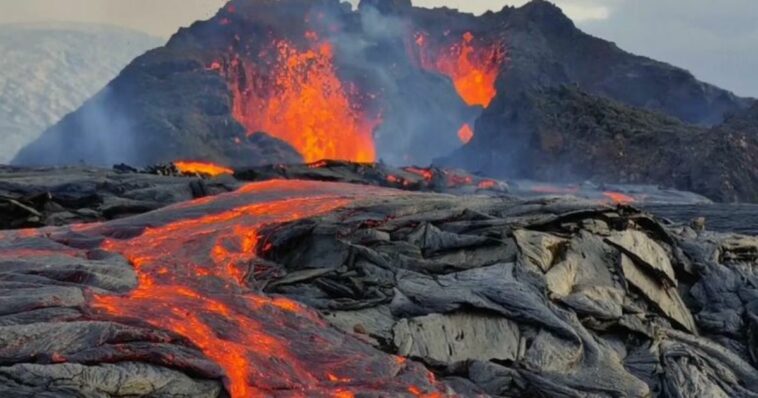
Iceland is getting ready for a possible volcanic eruption that might occur in the next few days and release poisonous fumes and seriously harm the local infrastructure.
A magma river is rising beneath the earth’s surface, which explains why there have been more earthquakes in the Reykjavik area since late October. How an eruption impacts domestic and international aviation will depend on the exact location of the magma’s surface breach.
The town of Grindavik, which is situated directly above the magma, has already been evacuated because of the possibility of toxic gases and “fire fountains.” The survival of Grindavik is unlikely because everything depends on the location of the magma’s ultimate rise to the surface, says Dr. Bill McGuire, an emeritus professor of geophysical and climate hazards at UCL. Superheated rock from an eruption may erupt on land or offshore and enter the ocean, in which case an explosive ash cloud may form.

The largest airspace closure in Europe since World War II was brought about by the 2010 Eyjafjallajokull volcanic eruption, which is estimated to have cost between 1.5 and 2.5 billion euros (£1.3 and 2.2 billion). But given the completely different circumstances surrounding this volcanic activity, such a large-scale impact is not anticipated. According to the Icelandic Meteorological Office, the magma is currently 800 metres from the surface, meaning that an eruption of the Fagradalsfjall volcano is “highly likely” and could occur in the next few days.
Because Iceland is situated over the Mid-Atlantic Ridge, it is accustomed to volcanic activity and has successfully developed a tourism industry there. The Eurasian and North American plates are separating at the ridge at a rate of a few centimetres per year due to the fracture of the Earth’s crust into separate plates. As a result, space is created for magma to rise to the surface and release lava or ash.
In 1783, Iceland experienced one of its biggest eruptions, resulting in an eight-month-long massive lava flow and massive sulphur clouds that hung over Northern Europe for more than five months. But the most recent data indicates that the eruption will be far smaller than previously thought.



GIPHY App Key not set. Please check settings