


 News Desk
but I ended up trapped
Lying in a dark room while a sonographer spread cold jelly on my abdomen would have felt almost restful, if I hadn’t had a migraine coming on.
Somewhere outside, my car was parked on a random street, with all my worldly possessions in the boot.
Life as a digital nomad seems romantic, flexibly working from your laptop while travelling the world – no ties, no rent, no mortgage – but I was starting to understand the flipside.

I’d spent the last three days crashing with friends in the city I used to call home.
I’d seen my dentist and therapist, picked up new glasses, attended work meetings in-person and even got a rare haircut.
Now, I was having a scan to look into my pelvis pain. All before setting off on a 300-mile drive the following day to dog-sit at the opposite end of the country.
I knew I was overwhelmed. Not for the first time, I wondered if my lifestyle was the problem.
The snap of the sonographer’s gloves concluded the appointment. He couldn’t see anything wrong, he said.
Relieved, I drove to my friend’s house, popped migraine medication and closed my eyes to catch up on some much-needed rest.
I had dreamed about nomad life for years. Every winter, my mood dropped with the daylight and I fantasised about co-working spaces near a beach.
I noted the launch of every start-up company that promised to organise travel and accommodation for remote working.
I even organised my own short, budget trip.
But I always found a reason to delay. When I’ve finished my degree, I told myself. When I earn more. When lockdown is over.
By 2021, I was living in a rented property in Exeter with my partner, Joe. We were both growing our businesses: me as a freelance social media manager, him as a freelance copywriter.
Then our landlady warned us she was going to sell the house.
Rents had increased hugely since we’d agreed to our lease. We certainly couldn’t afford to buy.
That’s when we started to discuss a nomad lifestyle. All of our work was digital and remote, and we both wanted to travel. This was our opportunity.
In early 2022, we sold our furniture, donated our possessions and stored valuables with friends and parents until we were down to bare essentials.
A part of me was resentful that it had taken the threat of homelessness to get here but I was so excited to finally give this lifestyle a go.
Joe and I started out pretty tame: house-sitting in Leicester, renting an AirBnb in Bristol, taking on a short-term let in Cornwall. It felt easy and we were saving money compared to a traditional rental contract.
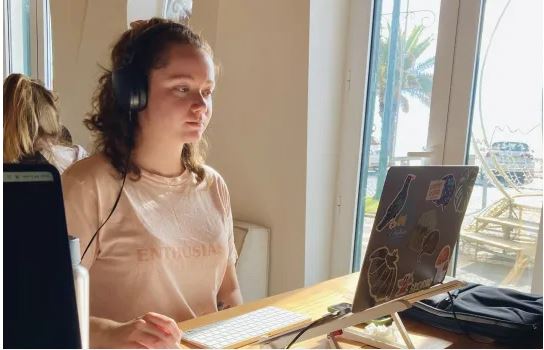
The accommodation quality wasn’t always great, but it didn’t matter as we were mostly out and about. We worked from coworking spaces, met new friends, and in our spare time we explored the local area. It didn’t feel like being on holiday; it was normal life, in different places.
After a few months, we ventured further, joining communities of travellers in co-living spaces in Normandy, Tenerife, and Madeira. True co-living spaces are independently owned and run, often set up in inherited family properties or old hotels and have live-in staff plus coworking and communal spaces where residents gather to cook, work out or play games.
I felt light and free. My language practice moved from Duolingo to real life. We made an effort to contribute to whichever community we were in, volunteering for charities, shopping at local markets and offering skill swaps.
At weekends, I took breathtaking hikes through volcanic national parks, and swam in secret caves with locals – all while working normal hours in the week to bring in my regular income.
But there were hurdles.


GIPHY App Key not set. Please check settings