


 News Desk
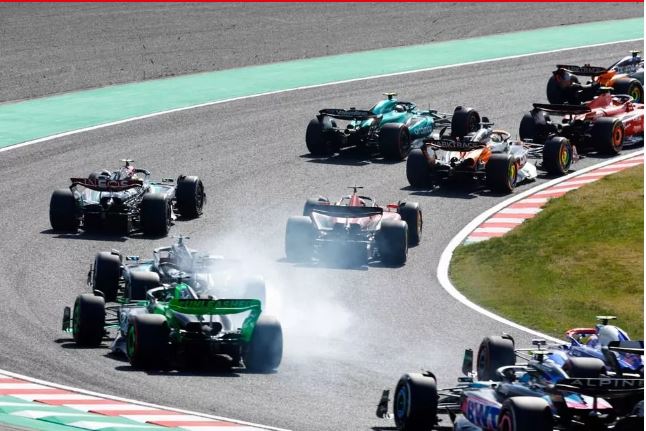
The Japanese Grand Prix was a feast for strategy fans as teams explored a variety of routes to the chequered flag.
The change of date for this year’s race, which shifted from autumn to spring, was the backdrop to this, as it meant the weekend was held in generally lower temperatures. It warmed up on race day, however, but began to cloud over during the race, causing dips in track surface temperature which further frustrated teams’ efforts to pick which tyre to run on.
The upshot was one-third of the field took soft tyres for the original start, the rest on mediums. As we have seen before, however, large variations in tyre choice at the start can lead to incidents, and sure enough Daniel Ricciardo’s medium-shod RB tangled with Alexander Albon’s soft-tyred Williams and the pair crashed out together.

That triggered a stoppage and standing restart which gave teams a chance to change tyres produced even more variety. Mercedes and Alpine switched their drivers, as did Williams with their sole remaining car. All five were in the same position of having two sets of hard tyres to use and only one medium, and were hoping to reach the end of the race with only one further tyre change.
None of them were able to pull it off. The only driver who managed a near-one-stop strategy was Charles Leclerc, who switched to a second fresh set of medium compound tyres during the stoppage.
Lewis Hamilton especially struggled with his car’s balance, and kept cranking on more front wing angle at his pit stops. “It took us two stints to finally dial more and more wing in to make up for that loss,” he told Channel 4. “In the last stint I was better, but it was too late. I had 10 seconds to regain.”
Hamilton’s lap times on the medium tyre at the end of the race, and to a lesser degree his second stint on hards, support team principal Toto Wolff’s view that the car’s pace improved after its “atrocious” opening stint.
But even the Red Bull drivers were still chasing a better balance in the race. Max Verstappen was unhappy with his initial front wing level – having gone against the recommendation of team principal Gianpiero Lambiase – and Sergio Perez dropped back far enough from his team mate that Red Bull allowed him to pit first, thereby gaining the advantage of fresh tyres sooner.
“Unfortunately, I think we got caught out with the increase of temperature. With the balance, we just couldn’t get on top of that in the first stint, which meant that the degradation was a little bit higher.”
Lando Norris, who was frustrated to be ‘undercut’ by Leclerc in Australia two weeks ago, pitted three laps before any of the cars ahead of him this time, eventually provoking Perez and Carlos Sainz Jnr to react. But he was in the same position as the Mercedes drivers, with two fresh sets of hard tyres, while the Ferrari and Red Bull duos had extra sets of mediums.



GIPHY App Key not set. Please check settings