


 News Desk
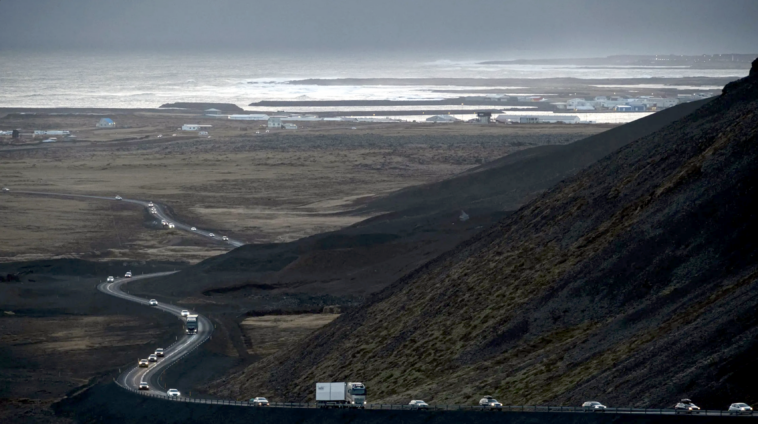
Since 2021, lava has sporadically oozed out of various fissures crisscrossing southwest Iceland. Now, a huge sheet of magma could erupt at any minute. But where, and how severe will the eruption be?
Late last week, on Iceland’s Reykjanes Peninsula, a concerning sequence of earthquakes suddenly turned into a full-blown volcanic crisis. A burst of intense and frequent seismic shaking, accompanied by a convulsing crust, suggested that a huge volume of magma was rapidly burrowing its way toward Svartsengi, the site of a major geothermal power plant and, close by, the coastal town of Grindavík, home to 3,500 people.
The region now nervously sits atop a vast sheet of magma simmering just half a mile belowground. At some point, likely within the coming days, it will probably erupt somewhere along a 10-mile-long line stretching from northeast of the town to a little ways out to sea. The two big questions, exactly where the eruption will get started and how severe it will be, are impossible to answer. But scientists watching the area closely have other questions, too: How did these eruptions go from safe spectacle to a potentially town-smothering danger? And why, after so much recent and violent movement, is the magma now just sitting there?

In some ways, this is exactly what magma here is expected to do. “This activity is very much in line with much Icelandic volcanism,” says Mike Burton, a volcanologist at the University of Manchester. “But the specifics of each crisis are always unique.” And much of the problem this time around has to do with the location this batch of magma has decided to camp in—and why it’s never obvious where an eruption on the peninsula may occur.
When people usually think of eruptions, they picture a mountain-shaped edifice with lava exploding out of a central vent at the summit or bleeding out of its flanks. Iceland does have those sorts of volcanoes, but the Reykjanes Peninsula also specializes in fissure-style eruptions: cracks in the ground that open, often with little warning, when magma below forces its way to the surface.
Magma cracking through the crust creates specific types of earthquakes, and along with the changing shape of the ground you can broadly track where this magma is going and how much magma is involved. But when molten rock reaches the uppermost section of the crust, it can very easily push those rocks aside—and the seismic activity often drops off just prior to an eruption commencing somewhere in the area.



GIPHY App Key not set. Please check settings