


 News Desk
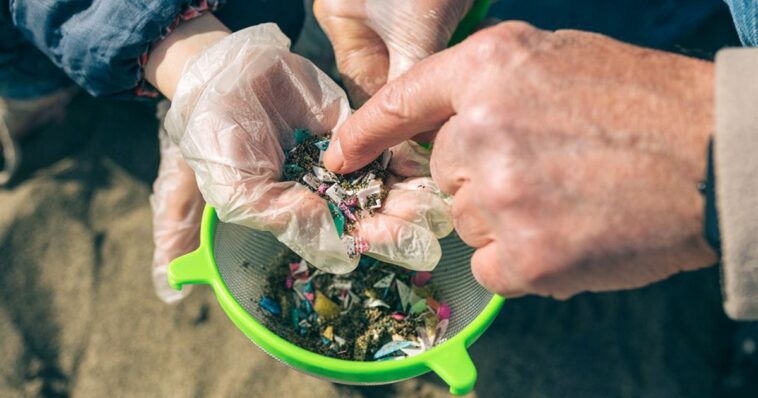
Richard Thompson conducted a beach clean-up on the Isle of Man in 1993 and found thousands of colourful fragments.
He found that the tiniest plastic fragment, no bigger than sand grains, was the most prevalent item on the beach. He taught marine biology at Plymouth, Southampton, and Newcastle universities during the course of the following ten years while finishing his PhD. Over the next ten years, they were able to confirm that the particles were all small plastic fragments, similar in size to sand grains, and were frequently found along the UK’s coastline.
In a brief study co-authored with Southampton University professor Andrea Russell in 2004, Thompson initially referred to the particles as “microplastics.” According to his theory, plastic gradually broke up into tiny, tenacious fragments that dispersed even farther as it entered the ocean. The finding gave rise to a whole field of study on microplastics, which was crucial in the US, New Zealand, and Canada’s decisions to tax plastic bags and outlaw the use of plastic microbeads in rinse-off cosmetics. Researchers are now examining even smaller pieces known as nanoplastics that find their way into our breastmilk, wombs, and blood.

Subsequently, Thompson established the International Marine Litter Research Unit at Plymouth, earned the title “godfather of microplastics” from a British politician, and was regularly invited to address the House of Commons on the dangers of marine litter. He was thrust into the centre of international talks in June to draft a global treaty to reduce plastic pollution, most recently in Paris.
Thompson is adamant that we cannot be saved by biodegradable plastic, nor can we be saved by any number of “cleanups,” such as the one he embarked on before his tragic expedition in 1993. Additionally, he thinks that the pollution caused by microplastics will only get worse if the plastics treaty leads the world to pursue incorrect ideologies.
According to Thompson, his discovery was the consequence of a poorly thought out solution: plastic was created as an eco-friendly substitute for ivory but quickly proved to be an essential tool in industries like engineering and medicine. But the issue started in the 1950s when the industry’s goals shifted to single-use packaging, which currently makes up 40% of the more than 400 million plastic tonnes produced annually.



GIPHY App Key not set. Please check settings