


 News Desk
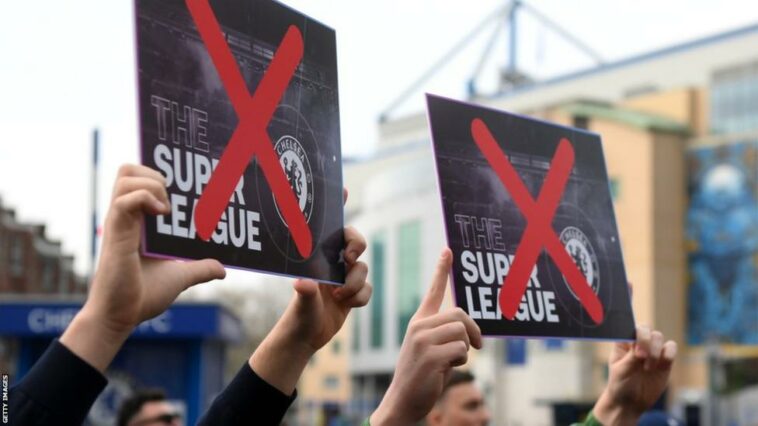
The European Super League is making headlines again.
It was initially launched 32 months ago but then dumped almost immediately by nine of its 12 founder members.
That followed widespread opposition which in England went as far as then-Prime Minister Boris Johnson and the Royal Family through Football Association president Prince William.

But the concept has been given fresh impetus. BBC Sport’s Simon Stone assesses a seismic day for European football and looks at what may come next.
- European Super League ban unlawful, says court
- Super League backers propose new European club competition
What happened on Thursday?
A ruling from the European Court of Justice (ECJ) in Luxembourg stated world and European governing bodies Fifa and Uefa had “abused a dominant position” by threatening the Super League clubs and their players with sanctions and exclusion from major competitions.
It also said rules that demand prior approval for “interclub football projects” were “unlawful” and that their exclusive control in negotiating commercial rights for competitions was restriction of trade.
The ECJ called Fifa and Uefa’s rules relating to the exploitation of media rights “harmful” to clubs, media companies and fans.
Within hours, a new European Super League (ESL) proposal had been released.
It was major stuff, capturing attention in much the same way as the launch had done.
If anything, the reaction this time has been swifter and more extensive.
Should Uefa be worried?
There are a couple of elements to this. Firstly, when they digested the initial release, Uefa officials were shocked.
However, when they started to read the detail within the case, it did not quite chime with the damning words on the ECJ press release.
Within the case, it seemed as though Uefa’s status as Europe’s footballing powerhouse was being confirmed.
It also soon became apparent that some of the issues it has been accused of ignoring, specifically rules around authorisation for launching new competitions, have been dealt with since the initial Super League launch – but it was the old details that were used by the ECJ in reaching its conclusions.
In short, Uefa felt it had nothing to beat itself up over. As Fifa president Gianni Infantino put it in his own statement: “Today’s judgement does not change anything, really.”
Except it had. The press release was music to the ears of A22 – the group backing the Super League project and standing with Real Madrid and Barcelona, its two remaining members given Juventus had signalled their intention to quit.
And, unlike the initial ‘launch’, which was limited to one late-night interview – in Spanish by Real president Florentino Perez – this time, A22, the management organisation brought in to sponsor and assist in the creation of the Super League, was on the front foot.
What would a new European Super League look like?
A statement from A22 was issued half an hour after the ECJ press release was sent out. In it, chief executive Bernd Reichart declared: “The Uefa monopoly is over. Football is free.”
Just over an hour after that came A22’s revamped Super League proposals. Sixty-four men’s teams split across three divisions, 32 women’s teams split across two. No clubs were mentioned but “guaranteed revenues” were promised, plus solidarity payments and a free state-of-the-art digital streaming platform.
Speaking to BBC Sport a couple of hours after that, Reichart was bullish about what had changed on the football landscape as far as A22 and its supporters were concerned.
“The ruling was pretty clear,” he said. “It talks about abuse of competition. There is little room for doubt. It is a clear ruling and a great day for football.”



GIPHY App Key not set. Please check settings