


 News Desk
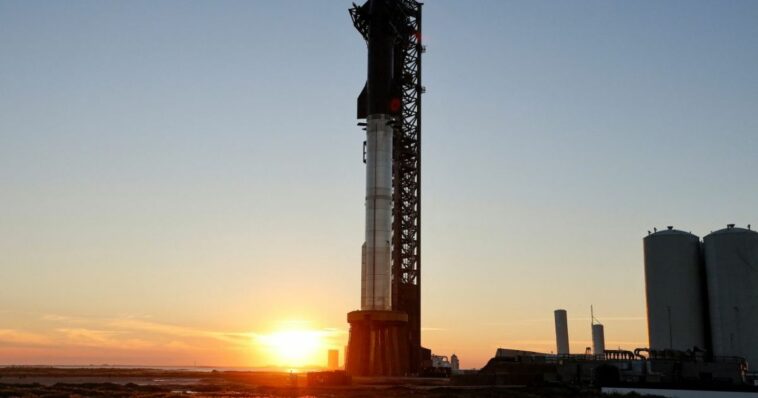
On Saturday, SpaceX plans to launch the largest rocket in the world, the Starship, on its second test flight.
The most potent rocket system ever constructed, the 120-meter Starship, was scheduled to launch from Texas on Friday, but it has been postponed because a component needs to be replaced. The Federal Aviation Administration gave SpaceX the go-ahead to conduct the test after worries were expressed about debris that was dispersed during the launch in April.
Elon Musk, the founder of SpaceX, envisions Starship, the system’s cruise ship that can accommodate up to 100 astronauts, as the first step in a human expedition to Mars. The enormous spaceship is ten metres higher than the 1969 Saturn V rocket that carried humans to the moon. SpaceX has demonstrated in the past that it is willing to have test flights fail, with Musk claiming that the company gains insight from knowing what goes wrong.

The rocket has undergone various upgrades for the second test, such as a new water-cooled steel flame deflector on the launch pad and a new heat shield installed on the booster. Reusing the upper and lower segments of the system is far less expensive than building new ones because they are made to power themselves safely back to Earth for a soft landing.
In order to establish Starship as a “multiplanetary species” and colonise Mars in the event that a catastrophe on Earth wipes out life on Earth, Musk designed it. Starship can carry up to 150 tonnes of cargo on lengthy interplanetary flights, enough to carry several dozen passengers. SpaceX has been contracted by NASA to put humans on the moon as early as 2025, including the first female astronaut.



GIPHY App Key not set. Please check settings